
"tree often"
9000 article(s) found
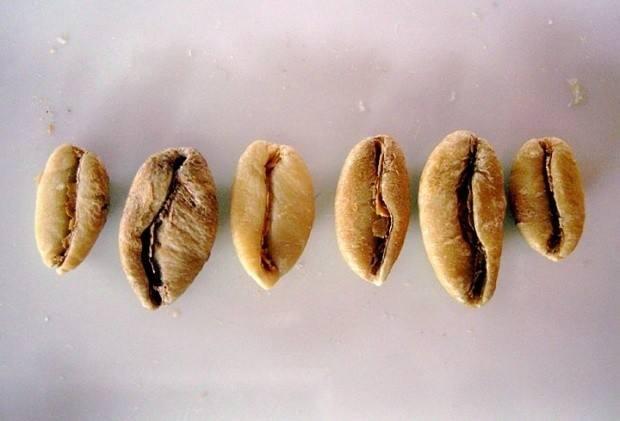
The third forgotten breed: boutique Rabia Coffee? Liberica, is the coffee good?
Professional coffee knowledge exchange more coffee bean information please follow the coffee workshop (Wechat official account cafe_style) the most common varieties in the coffee industry are Arabica and Robsta, but there is also coffee from Liberia (C. liberica), which is often forgotten by the public, and this variety is often recognized by the boutique coffee industry as "bitter, metallic and woody" coffee, so that it is not to be

Morphological characteristics and planting environment of small-grain coffee
Morphological characteristics edit small trees or large shrubs, 5-8 m tall, base usually much branched; old branches gray, small-grained coffee (6) nodes inflated, young branches glabrous, compressed. Leaves thinly leathery, ovate-lanceolate or lanceolate, 6-14 cm long and 3.5-5 cm wide, tip long acuminate, acuminate part 10-15 mm long, base cuneate or slightly obtuse, rarely rounded, entire or present

A brief introduction to the flavor, taste and aroma characteristics of Yemeni boutique coffee beans with unique flavor
In Yemen, coffee growers plant poplars to provide shade for coffee trees to grow. As in the past, these trees are planted on steep terraces to maximize the use of less rainfall and limited land resources. In addition to the Tippika Coffee Tree and the Bourbon Coffee Tree, more than a dozen different coffee species native to Ethiopia are grown in Yemen. Authentic

Coffee History of South America
[Colombia] is the world's second-largest coffee producer, accounting for about 12% of the world's annual production, although much lower than the 30 to 35% of Brazil, most of which are high-quality alpine washed beans. Central Colombia is divided into several valleys by three north-south vertical mountains, of which the central and eastern mountains are the main coffee producing areas. Coffee here is named after the market of distribution,

What are the requirements of the planting environment for the growth of coffee trees? How long does it take to bear fruit?
Professional coffee knowledge exchange more coffee bean information please pay attention to the coffee workshop (Wechat official account cafe_style) what are the requirements for the growing environment of coffee trees? How long does it take to bear fruit? Although the coffee tree is called a tree, it is actually an evergreen shrub. If it is not trimmed, it can be as high as 3-9 meters. There is a glossy dark green at the top of the leaf and nothing at the bottom of the leaf

Illustrating the effect of coffee tree planting altitude on coffee flavor why high-quality coffee beans are at high altitude
Professional baristas Please follow the Coffee Workshop (official Wechat account cafe_style) when it comes to the growing conditions for good coffee, high altitude is often mentioned. Simply looking at the picture only helps to understand that coffee beans grown at high altitude can show more good taste after proper roasting. As for why there are these differences? Take a look at the following analysis. Coffee flavor by altitude
History of Coffee in South America
[Colombia] is the world's second-largest coffee producer, accounting for about 12% of the world's annual output, which is much lower than Brazil's 30% to 35%, but most of them are high-quality mountain-washed beans. Central Colombia is divided into valleys by three north-south longitudinal mountains, of which the central and eastern mountains are the main coffee producing areas. The coffee here is named after the distributed market

Description of flavor of Columbia Linglong coffee beans introduction to the origin of grinding scale
The pure taste of Colombian coffee comes from Colombia's natural environment with the most favorable conditions for coffee growth. But beyond that, it is inseparable from the hard work of local growers. In Colombia, coffee cultivation has reached 1.07 million hectares, there are about 302000 coffee plantations in the country, and 30 to 40 per cent of the rural population depends directly on coffee production. Columby

Coffee lovers must know some common sense about the origin, tree species and name of coffee.
The exchange of professional baristas Please pay attention to the coffee workshop (Wechat official account cafe_style) many coffee lovers have their own opinions on which latte tastes good and the flowers look good, but when it comes to individual coffee, they have no choice but to stare at Kenya, Yega Xuefei and Rosa. When it comes to whether they are from the same kind of coffee tree, and what is the relationship between the origin and the tree species, it is even more confusing. Old

Which brand of blue mountain coffee beans is good? What's the flavor of Jamaica Blue Mountain Coffee?
Professional coffee knowledge exchange more coffee bean information please follow the coffee workshop (Wechat official account cafe_style) Jamaica Blue Mountain English is Jamaica Blue Mountain Coffee, used to be all-powerful in the competition field and bidding field, its taste is very sweet and sour, very balanced and smooth, due to growing in the Blue Mountains of Jamaica, only more than 2000 meters above sea level can grow to the top.

Basic knowledge of Fine Coffee in South America
[Colombia] is the world's second-largest coffee producer, accounting for about 12% of the world's annual output, which is much lower than Brazil's 30% to 35%, but most of them are high-quality mountain-washed beans. Central Colombia is divided into valleys by three north-south longitudinal mountains, of which the central and eastern mountains are the main coffee producing areas. The coffee here is named after the distributed market
South American coffee history boutique coffee bean species
[Colombia] is the world's second-largest coffee producer, accounting for about 12% of the world's annual output, which is much lower than Brazil's 30% to 35%, but most of them are high-quality mountain-washed beans. Central Colombia is divided into valleys by three north-south longitudinal mountains, of which the central and eastern mountains are the main coffee producing areas. The coffee here is named after the distributed market
Fine coffee Colombian coffee species morphology
The main varieties of Colombian coffee are small grains of coffee. Plants are small trees or large shrubs, 5-8 m tall, usually much branched at base; old branches gray-white, nodes dilated, young branches glabrous, compressed. Leaves thinly leathery, ovate-lanceolate or lanceolate, 6-14 cm long and 3.5-5 cm wide, tip long acuminate, acuminate part 10-15 mm long, base cuneate or slightly obtuse, rarely rounded, entire or

Characteristics of Colombian Coffee Flavor Manor
The main varieties of Colombian coffee are small grains of coffee. Plants are small trees or large shrubs, 5-8 m tall, usually much branched at base; old branches gray-white, nodes dilated, young branches glabrous, compressed. Leaves thinly leathery, ovate-lanceolate or lanceolate, 6-14 cm long and 3.5-5 cm wide, tip long acuminate, acuminate part 10-15 mm long, base cuneate or slightly obtuse, rarely rounded, entire or

The Cultural History of Coffee in South America
[Colombia] is the world's second-largest coffee producer, accounting for about 12% of the world's annual output, which is much lower than Brazil's 30% to 35%, but most of them are high-quality mountain-washed beans. Central Colombia is divided into valleys by three north-south longitudinal mountains, of which the central and eastern mountains are the main coffee producing areas. The coffee here is named after the distributed market

A brief introduction to the planting market price of Yemeni boutique coffee bean varieties with endless aftertaste
The origin of these trees is Ethiopia. Yemen is the first country in the world to produce coffee on a large scale as a crop. Today, Yemeni coffee farmers still produce coffee in the same way as they did 500 years ago. Coffee berries grow naturally on trees, without any artificial fertilizers or pesticides, receive a small amount of rain and fog on the hillside in summer, blossom and bear fruit.

Basic knowledge of Fine Coffee Coffee History of South America
[Colombia] is the world's second-largest coffee producer, accounting for about 12% of the world's annual output, which is much lower than Brazil's 30% to 35%, but most of them are high-quality mountain-washed beans. Central Colombia is divided into valleys by three north-south longitudinal mountains, of which the central and eastern mountains are the main coffee producing areas. The coffee here is named after the distributed market
The taste of coffee
Coffee trees are very similar to laurel and usually grow between the Tropic of Cancer and the Tropic of Cancer. A coffee tree usually grows for about three to four years before it begins to bear fruit. The fruit is a red berry, which is dried and the pulp is removed to separate the coffee beans. There are shadows of coffee beans all over the world, and they can grow as usual as long as the climate is right. These are suitable for cultivating coffee.

Mocha pot coffee filter paper use method folding method
The use of mocha pot coffee filter paper folding method 1, increase the time of coffee soaking; if only use the original screen filtration, there is not enough resistance, basically water dripping, extraction flow, there is not enough time to extract the essence of coffee, coffee powder is often uneven extraction, the middle coffee powder extraction transition, the edge of coffee powder extraction is often insufficient; after the use of coffee filter paper